If your views suddenly drop or a random post takes off while your “best” content stalls, you’re not alone. Creators and brands in the U.S. are still trying to understand why TikTok visibility feels inconsistent. The platform isn’t random; it’s systematic. In this guide, you’ll find the tiktok algorithm explained in a simple way, with a practical look at what actual influences reach today.
We’ll explain recent TikTok algorithm changes, clarify how personalization works at scale, and show how the TikTok recommendation algorithm decides who watches your videos. By the end, you’ll know what to prioritize in 2026 to earn steady distribution, without chasing myths or short tricks.
At its core, the TikTok algorithm 2026 values relevance, not popularity. Rather than simply pushing big accounts, TikTok looks at each video individually and tests it with small audience segments before showing it more broadly.
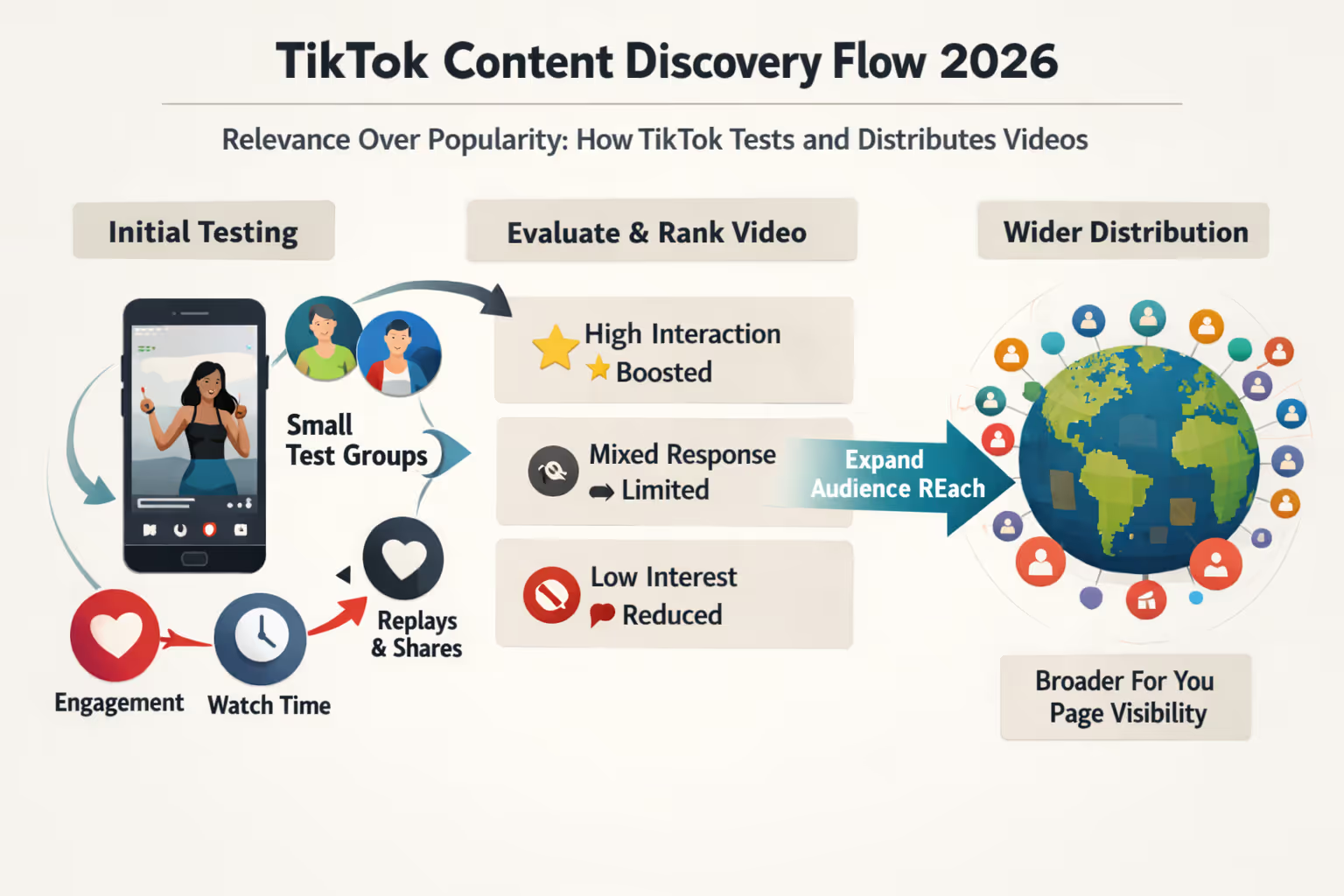
To predict viewer satisfaction, TikTok considers several signals:
Experienced creators consistently report that retention in the first three seconds now matters more than follower count.
Personalization is where TikTok outpaces other platforms. The system creates interest clusters from what a user watches, skips, or engages with, and then matches new content to those clusters in real time. As a result, niche creators can experience rapid growth when content closely matches viewer intent.
Best practice: Focus on one clear topic per video. Mixing messages confuses the model and limits distribution.
New Tiktok algorithm changes focus on authentic and original content. Now TikTok down ranks the low-effort reposts, watermark-heavy content and videos that seem mass-produced. Original videos are completed at a much higher rate than recycled clips, according to TikTok’s Creator Portal.
Creators who are verified through TikTok’s Creator Marketplace also report greater reach by using native tools, such as in-app captions and responsibly trending sounds.
Here’s what the most experienced creators are doing differently in 2026:
If you’re trying to become more trustworthy, completing TikTok verification and securing a clear tiktok username claim can also strengthen trust signals on the platform for viewers and brand partners.

Professional creators often rely on social media support services alongside:
External research from respected industry sources like Social Media Examiner’s TikTok marketing insights and TikTok’s official newsroom updates supports the idea that consistency and audience alignment outperform short-term viral tactics.
To go viral on TikTok in 2026, create content that has strong hooks and communicates a clear topic with high watch time. Videos that viewers keep watching and sharing also get pushed to bigger audiences.
TikTok is expected to continue growing, with more focus on e-commerce, AI-driven content, and personalized feeds.
At least 1,000 followers are needed to access TikTok Live.
It’s simple which mainly focus on short, engaging videos, trending sounds, consistent posting, and leveraging AI-driven trends and hashtags.
Yes, you can expect TikTok to be around in 2026. The platform is still investing money into creators, ads and new tools, particularly in the U.S.
TikTok, as it looks in 2026, focuses on original, small niche and retaining audience. Regular uploading and genuine engagement are more important than the number of followers.
In 2025, the TikTok algorithm sorts videos according to watch time, replays, shares and interest from different users. All video is experimentally shown to small groups, before wider release.
For small or new accounts, 20k views can be considered viral. For larger accounts, virality usually means reaching far beyond their average view count.
The key to winning on TikTok in 2026 is figuring out how content connects with actual people. The thing about clarity, originality, and audience intention is that the system works in your favour. Be data-driven, be authentic, and grow slowly, you get growth with a commitment to authenticity, not by shortcutting your way.
.avif)



.avif)


.avif)
.png)
.png)
.png)