Getting verified on TikTok is a credibility marker that sets you apart in a sea of over 1.5 billion users. That tiny blue check tells viewers your account is authentic, influential, and worth trusting.
But meeting the TikTok verification requirements in 2026 is tougher than ever. TikTok doesn’t accept public applications, so verification is based entirely on performance, reputation, and consistency.
If you're aiming for that badge, you’ll need more than just a viral video. This guide breaks down exactly what matters, what doesn’t, and how to boost your chances.
The blue checkmark is manually assigned by TikTok’s Trust & Safety or Content Ops team, based on signals pulled from internal analytics, cross-platform identity checks, and risk flags.
It doesn’t appear due to a viral post or sudden follower spike. The platform looks at media references scraped by third-party tools like Meltwater and NewsWhip, checks your handle consistency across social platforms, and confirms your identity using government ID records if needed.
Verification alters how the algorithm treats your content. Verified accounts:
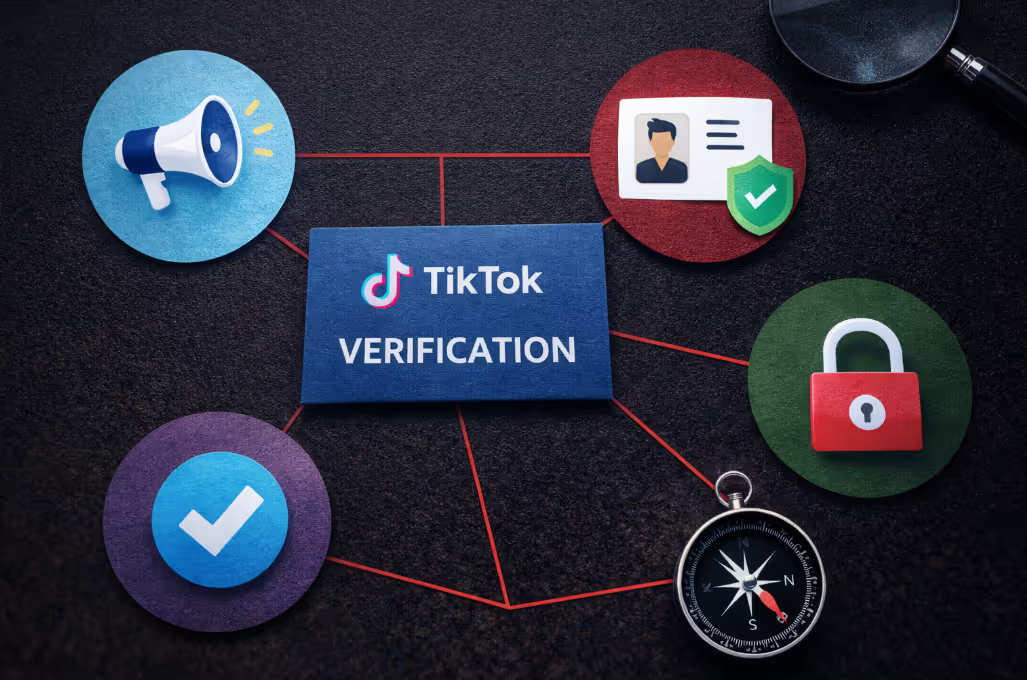
TikTok uses cross-platform identity mapping. If your TikTok handle doesn’t match your verified handles on Instagram, YouTube, or Twitter (now X), your chances drop.
For creators and public figures, TikTok expects a visible link to at least one verified social profile, often in the bio. Business accounts must connect to a verifiable website with domain email addresses and WHOIS data that aligns with the TikTok profile.
If your name or brand is being used by someone else, your best move is to file a TikTok username claim. TikTok factors username disputes into its impersonation risk model, which directly affects verification priority.
TikTok filters out “generic” accounts using automated visual and metadata fingerprinting. For example:
TikTok measures activity by looking at:
TikTok also assigns a hidden “health score” to each account based on user reports, muted content, and removed videos.
This is the real gatekeeper. TikTok runs automated checks across external databases such as:
Here’s what actually counts:
Even if you have a viral video with 10M views, if you don’t appear in non-paid press, TikTok likely won’t flag your account for human review.
To meet the requirements to get verified on TikTok, your off-platform reputation must exist before TikTok acknowledges you.
TikTok’s verification process isn’t based on a request - it’s based on signal detection. Accounts that meet the requirements for verification on TikTok aren’t chosen by popularity alone.
Instead, TikTok runs automated scans that flag accounts demonstrating real-world influence, identity risk, and sustained attention across both the platform and external media.
What actually triggers that internal review?
Even minor violations - like using restricted hashtags, posting borderline content, or triggering copyright flags - are logged into your account history.
If you’ve had videos removed, been muted without notice, or received a content warning, your profile is already flagged.
Verification requires a 30-day trail of healthy content behavior. If your last upload was months ago or your posting schedule is inconsistent, TikTok assumes the account isn’t active or doesn’t represent a current public figure.
If your username, bio, or profile photo are too similar to another creator’s, your account may be automatically classified as suspicious. TikTok uses visual similarity detection tools to scan for duplicates.
To correct this, filing a formal username claim or working with trusted account recovery services is often necessary, especially if someone else is using your name or brand without permission.
Getting verified on TikTok in 2026 requires more than content quality, it demands alignment with strict TikTok verification requirements that go beyond the app itself.
If you believe you're eligible but facing issues with impersonation or access, consider professional help. Social Rescue offers trusted support for creators dealing with account recovery, verification blocks, or profile claims.
There is no set number. Some creators are verified with 10,000 followers, while others with 1M aren’t - it depends on notability and risk signals.
Yes. If your account becomes inactive, violates community guidelines, or changes identity, TikTok can remove your badge without warning.
Yes, but only if the business has strong external proof - like press coverage, trademark registration, or verified links to major platforms.
No. Viral videos help with visibility, but verification also requires sustained activity, media recognition, and account trustworthiness.
No. TikTok doesn’t accept public applications - verification is offered only after internal review based on platform and external signals.
.avif)



.avif)


.avif)
.png)
.png)
.png)