Social media algorithms control how content is ranked, filtered, and shown to users. If your posts struggle to reach people, the issue is often not quality but a lack of alignment with the algorithm in social media platforms.
Every network evaluates signals like engagement, relevance, and user behavior before deciding who sees your content. To improve reach, you need to understand how these systems think and what actions trigger visibility.
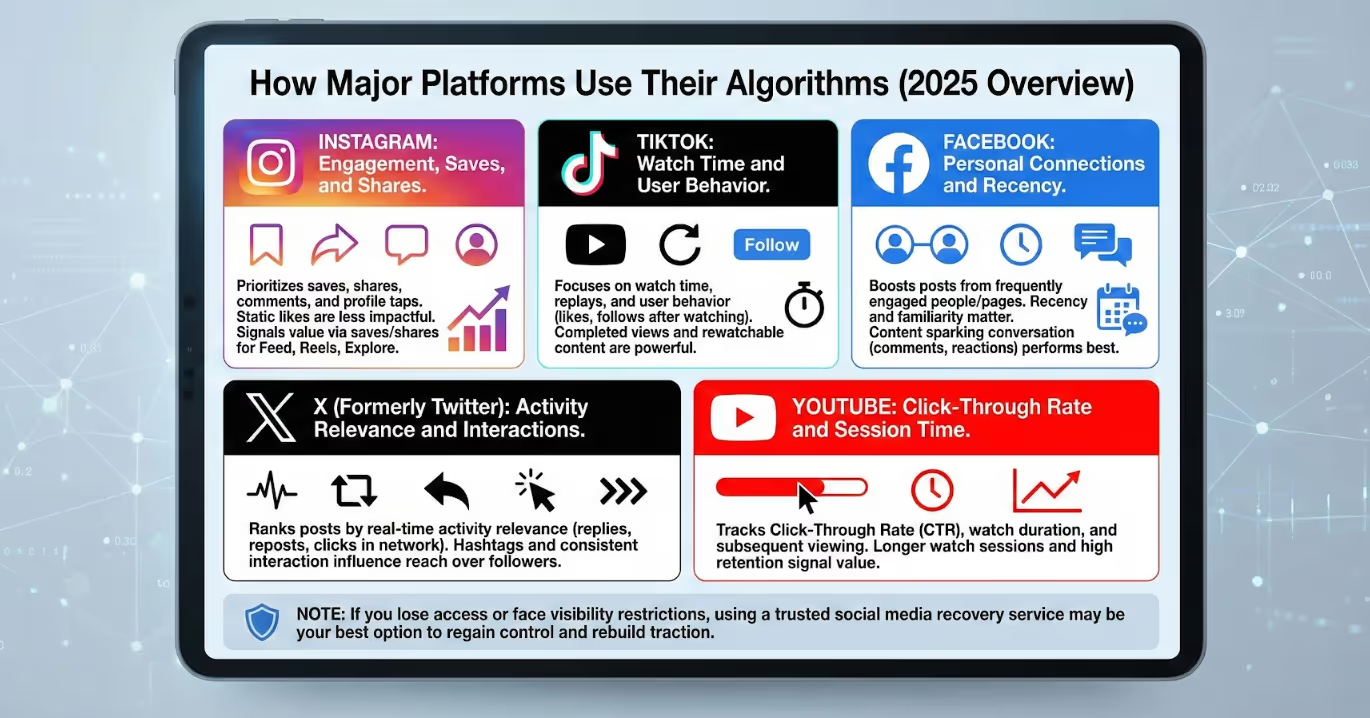
Each algorithm social media is designed to keep users engaged by showing them content that feels personal, timely, and relevant.
The Instagram algorithm prioritizes posts that generate saves, shares, comments, and profile taps. Static likes are no longer enough. The more a post signals value (via saves or shares), the more likely it appears in the feed, Reels tab, and Explore page.
TikTok focuses heavily on watch time, replays, and user behavior such as likes or follows after watching. The algorithm learns what you like based on completed views, not just views alone, making short, rewatchable content more powerful.
Facebook’s algorithm boosts posts from people or pages you engage with often. Recency and familiarity matter. Content that sparks conversation (comments, reactions) performs best.
X ranks posts based on real-time activity relevance, meaning replies, reposts, and clicks within your network. Hashtags and consistent interaction influence reach more than followers.
YouTube’s algorithm tracks click-through rate (CTR) and how long users stay watching your videos and others afterward. Longer watch sessions and high retention signal value. If you lose access or face visibility restrictions, using a trusted social media recovery service may be your best option to regain control and rebuild traction.
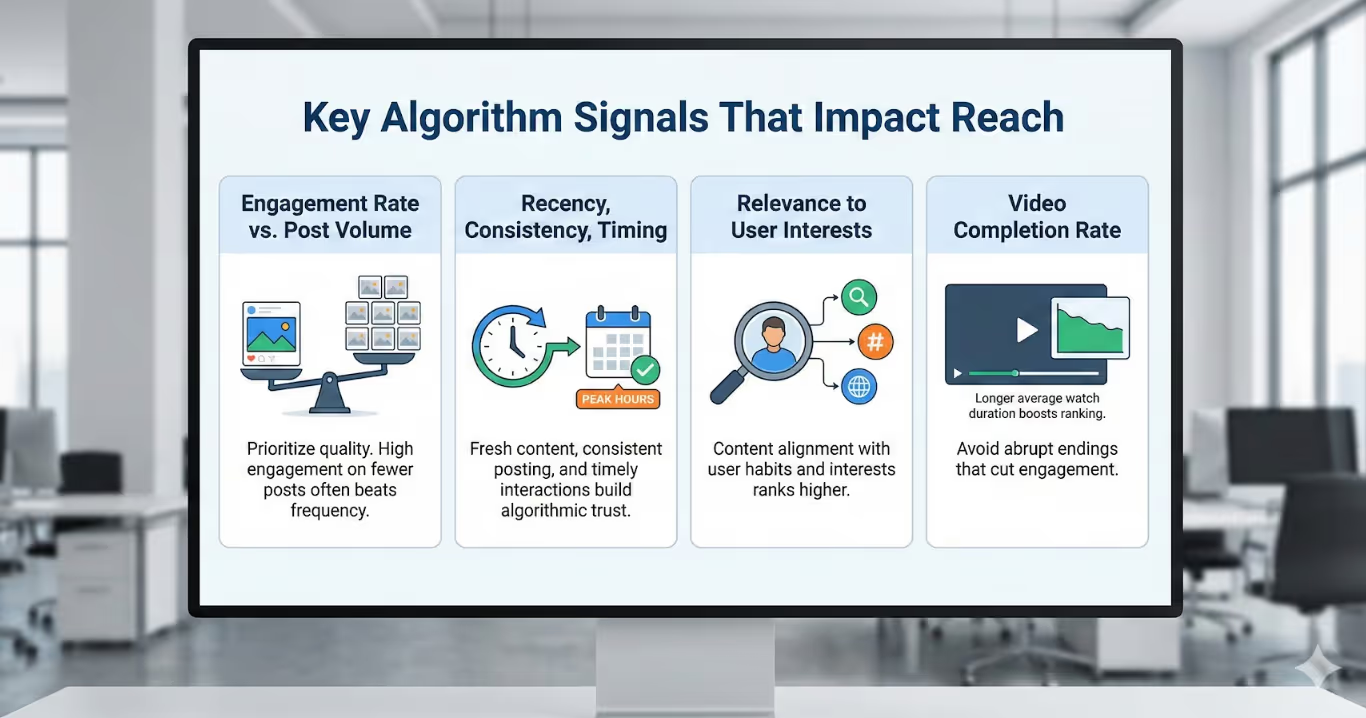
These signals help platforms decide which content gets prioritized and which gets ignored. The algorithm meaning in social media refers to the system that evaluates every piece of content before showing it to users. Below are the core signals that influence that decision:
Posting more doesn’t guarantee better results. What matters is how much engagement each post receives relative to your audience size.
Algorithms favor content that is fresh, reliable, and timed for when your audience is active.
Content that aligns with a user’s habits and interests ranks higher.
For video-heavy platforms like TikTok and YouTube, watch time is critical.

Once you start understanding social media algorithms, you can shape your content to work with them - not against them. Every platform has preferred content styles, triggers, and engagement types.
Your first line, your caption, and your image or video preview all influence what happens next. If users stop scrolling, you’ve done your job.
Pro Tip: On Instagram, the first 125 characters of your caption matter most. Front-load them with the hook before the “More” cut.
Algorithms tend to reward active but not spammy accounts. Consistency builds trust signals, and variety keeps users engaged longer.
Pro Tip: For TikTok, 1–2 posts per day is ideal. For Instagram, 3–5 high-quality posts per week paired with daily stories tends to perform well.
Each platform heavily promotes its native tools. If a feature is new or highly used, the algorithm boosts content that uses it.
Pro Tip: Instagram often boosts accounts that use all three features: feed posts, stories, and Reels within the same week.
Algorithms value real connections, not just one-way content. Direct messages, replies, and profile visits all signal interest and engagement.
Pro Tip: Accounts with frequent DM exchanges are more likely to appear higher in that follower’s feed.
Some actions can quietly lower your reach, even if your content looks fine on the surface.
Pro Tip: Every platform uses trust metrics. Once you lose trust, even good posts may get suppressed - so stay consistent, not manipulative.
To grow consistently, you need to analyze your content’s performance in context - not just based on likes or views. Instead of chasing viral moments, focus on what types of content are quietly building engagement over time.
Look at retention rates, link clicks, and saves, not just surface-level metrics. Use A/B testing to try different formats or post timings, and track which patterns consistently bring stronger reach. If your metrics suddenly drop or your posts stop reaching your audience altogether, it could be a sign of reduced visibility or shadow filtering.
In these cases, don’t panic. Start by reviewing your content history and interaction patterns, then consider using trusted account recovery services if something feels off.
The more you understand how social media algorithms work, the better you can position your content for consistent reach and engagement. Each platform may reward different behaviors, but they all share one goal: keeping users interested.
By creating content that sparks interaction, using platform-native tools, and monitoring performance closely, you give the algorithm exactly what it wants.
A social media algorithm is the automated system that decides which content gets shown to which users. It ranks content based on factors like relevance, engagement, watch time, and user behavior.
Drops in reach can be caused by lower engagement, inconsistent posting, or algorithm updates. Sometimes, account issues or violations may also reduce visibility temporarily.
Post frequency depends on the platform and your audience. Aim for consistency: 1–2 TikToks per day, 3–5 Instagram posts per week, and at least one YouTube video weekly are good starting points.
Yes, but only when used correctly. Hashtags help categorize content and signal relevance to the algorithm. Use specific, audience-targeted hashtags rather than broad or trending ones that don't match your post.
.avif)



.avif)


.avif)
.png)
.png)
.png)