Losing access to a Facebook account can be distressing, especially when that account includes personal memories, business pages or years of connections. In that moment of urgency, many Facebook users turn to search engines to find immediate help. That's often where they run into misleading results, including a Facebook fraud phone number that claims to offer direct customer support.
If users are genuinely locked out or believe their account has been compromised, the safest starting point is always Facebook’s official recovery workflow, such as facebook account recovery, which guides users through identity verification and secure access restoration. This process is the only method endorsed by Meta and does not require payment, passwords, or third-party intervention..
A Facebook customer service scam occurs when an unidentified person or company purports to represent Facebook (or Meta) in order to obtain sensitive information, money, or access to user’s Facebook account.
Scams that impersonate Facebook and may appear in suspicious emails, messages or phone calls:
Facebook does not authorize third parties to provide phone-based customer support for standard consumer accounts.
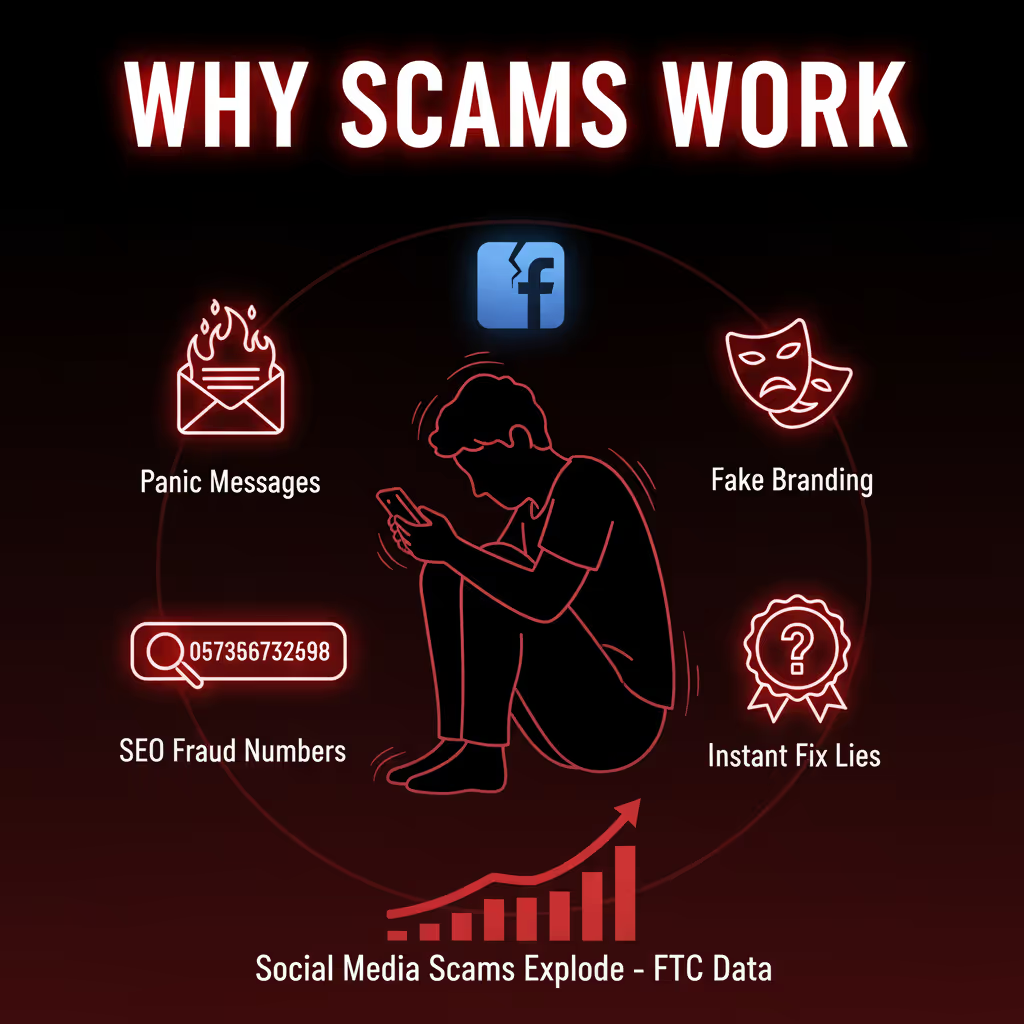
Facebook support scams target users at their most desperate moment: locked out of accounts, hacked, or otherwise restricted, victims are also more likely to act quickly and trust what looks to be official information.
Scammers exploit this behavior by:
According to data from the U.S. Federal Trade Commission (FTC), social media-related fraud has grown significantly in recent years, with account takeover and impersonation scams ranking among the most reported categories.
Source: https://reportfraud.ftc.gov
Knowing how Facebook provides real support services can help you avoid a Facebook support scam.
For most users, Facebook provides assistance only through:
Facebook do not have a customer support phone number listed publicly for general users. Any offer of phone-based support should be treated with suspicion.
Common Scam Techniques Used by Fraudsters
Scammers advertise a Facebook scam number and request that victims call it for help recovering their accounts. After calling, the victims could be asked to provide their log-in information, any two-factor authentication codes sent to them and/or a payment.
Users may be directed to fake login pages designed to collect usernames, passwords, or one-time verification codes.
Some agents are asking people to install remote desktop software, which would give attackers access to the device.
Emails, text messages, or advertisements may look like they’re from Facebook security teams and often use threatening language or say your account is in danger of being suspended.
These are all ways of facilitating facebook impersonation scheme and have nothing to do with Meta.
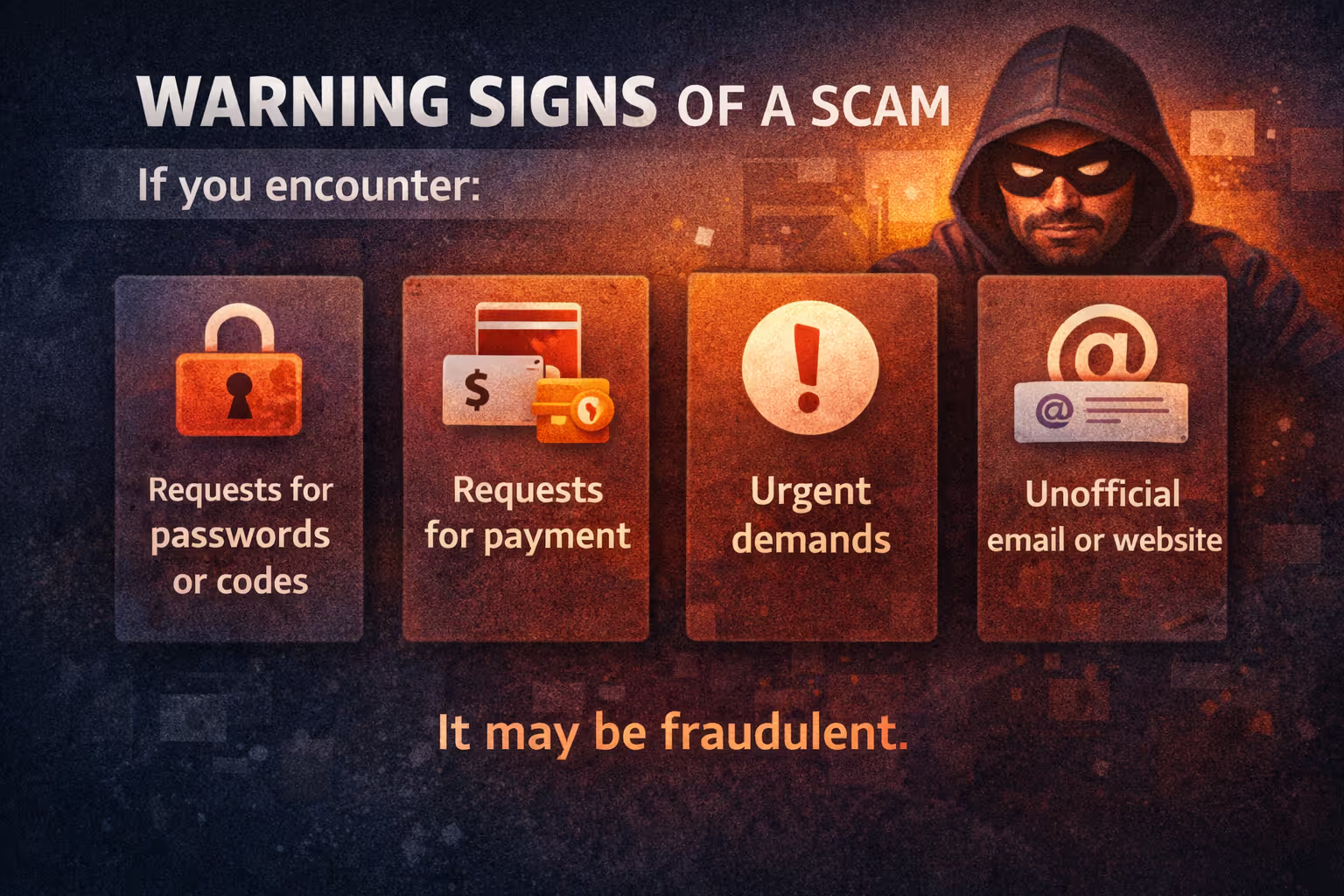
These practices are not authorized by Facebook and should be treated as fraudulent.
If you believe you interacted with a scam:
For general support requests through social media channels, verified social media support services may provide more curated, compliant and useful advice.
Governments have been warning about impersonation and account takeover scams for decades. The FBIs Internet Crime Complaint Center (IC3) reports that social engineering, where an attacker impersonates a trusted organization, is still the most common and effective mode of online fraud.
Authoritative references include:
FTC Consumer Fraud Reporting: https://reportfraud.ftc.gov
FBI IC3 Internet Crime Reports: https://www.ic3.gov
By reporting suspected scams, you can help us to identify them quickly and protect other consumers.
A:No. Facebook does not have a customer service number you can call to talk to customer support.
A: Change your password immediately, and check your recent activity if possible to determine fraudulent logins.
A: They’ll come from Facebook or a verified Meta email address and won’t ask for your password or request a payment.
A:Depending on the circumstances, there may be scope for recovery through official verification procedures.
A:Facebook does not allow third-parties to operate as official support and users should beware of any service that asks for credentials, or that suggests it can guarantee results.
A Facebook fake phone number or fake offer of help might look legit, especially when your account is in trouble. But knowing how Facebook support really works is the best way to protect yourself from being scammed.
By understanding warning signs, utilizing official recovery channels, and actively implementing security strategies, users can mitigate the risks of account exposure and financial loss. This article intends to support informed, responsible approaches to navigate Facebook account challenges.
.avif)



.avif)


.avif)
.png)
.png)
.png)