If you've got an Instagram account but are confused between whether to stick with a personal profile or upgrade to a business one, you aren't alone. With so many different options, many users have a hard time determining which one will help them achieve their goals. Whether you’re building a brand or influence or just posting your life, selecting the incorrect type of account can restrict your growth potential and access to features.
In this guide, we simplify the differences between an Instagram business account vs personal account. By the end, you will clearly know which one works for you, what features you may be missing out on, and how to correctly switch without confusion.
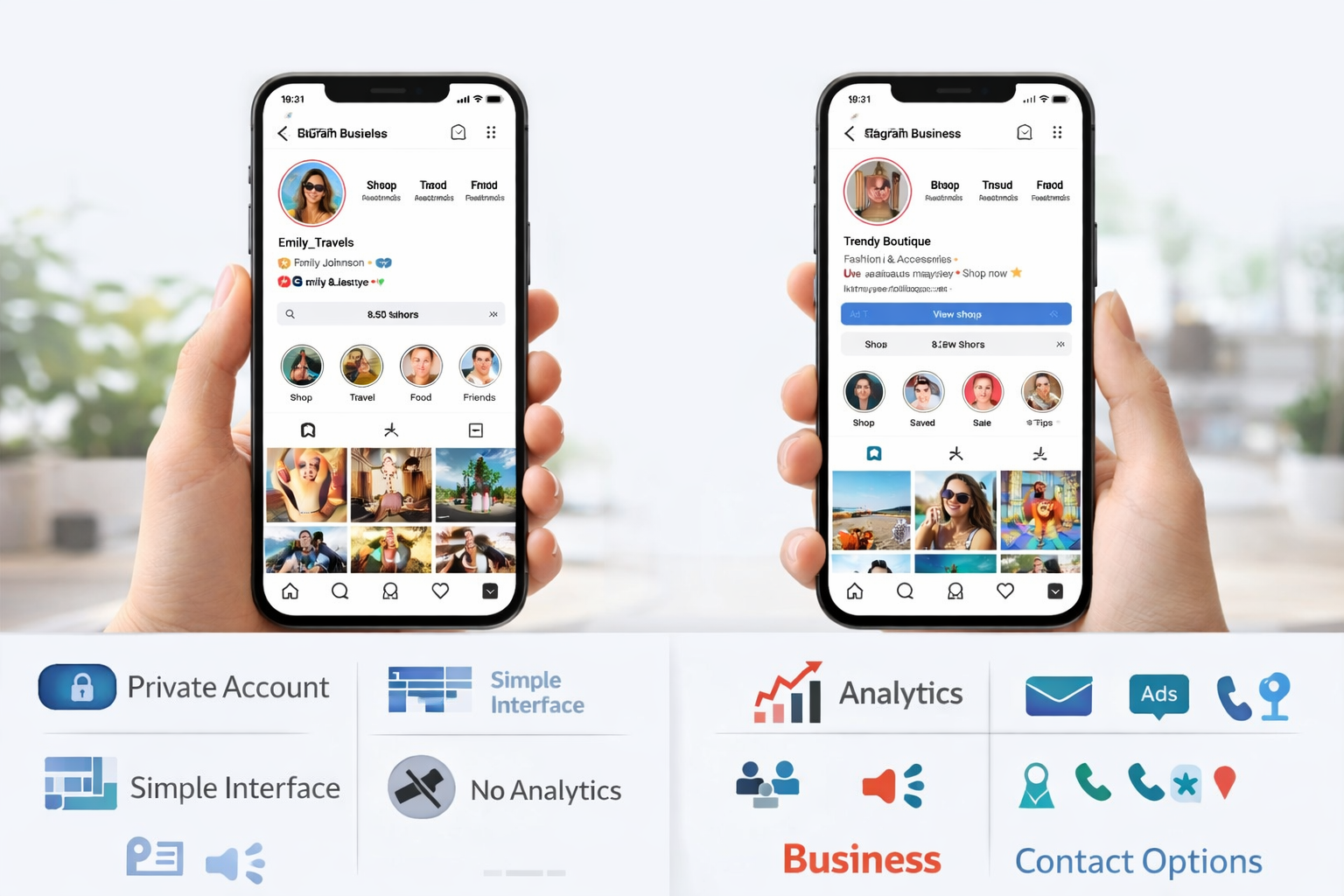
Personal account is meant for a common user who just wants to post their favorite photographs, interesting stories and share them with friends or other people.
A business account is built for brands, creators, and professionals. Many businesses also combine it with social media support services to maximize growth and engagement.
According to business.com, over 200 million businesses use Instagram daily, showing how valuable business tools can be for growth.
Now, let’s dive deeper into the business account vs personal account Instagram comparison:
Business accounts offer insights like:
Whereas, you won’t be seeing such things in the personal accounts on Instagram.
Only business accounts can:
This is essential for companies and influencers looking to expand their reach.
Business accounts allow:
Personal accounts don’t support direct business contact features.
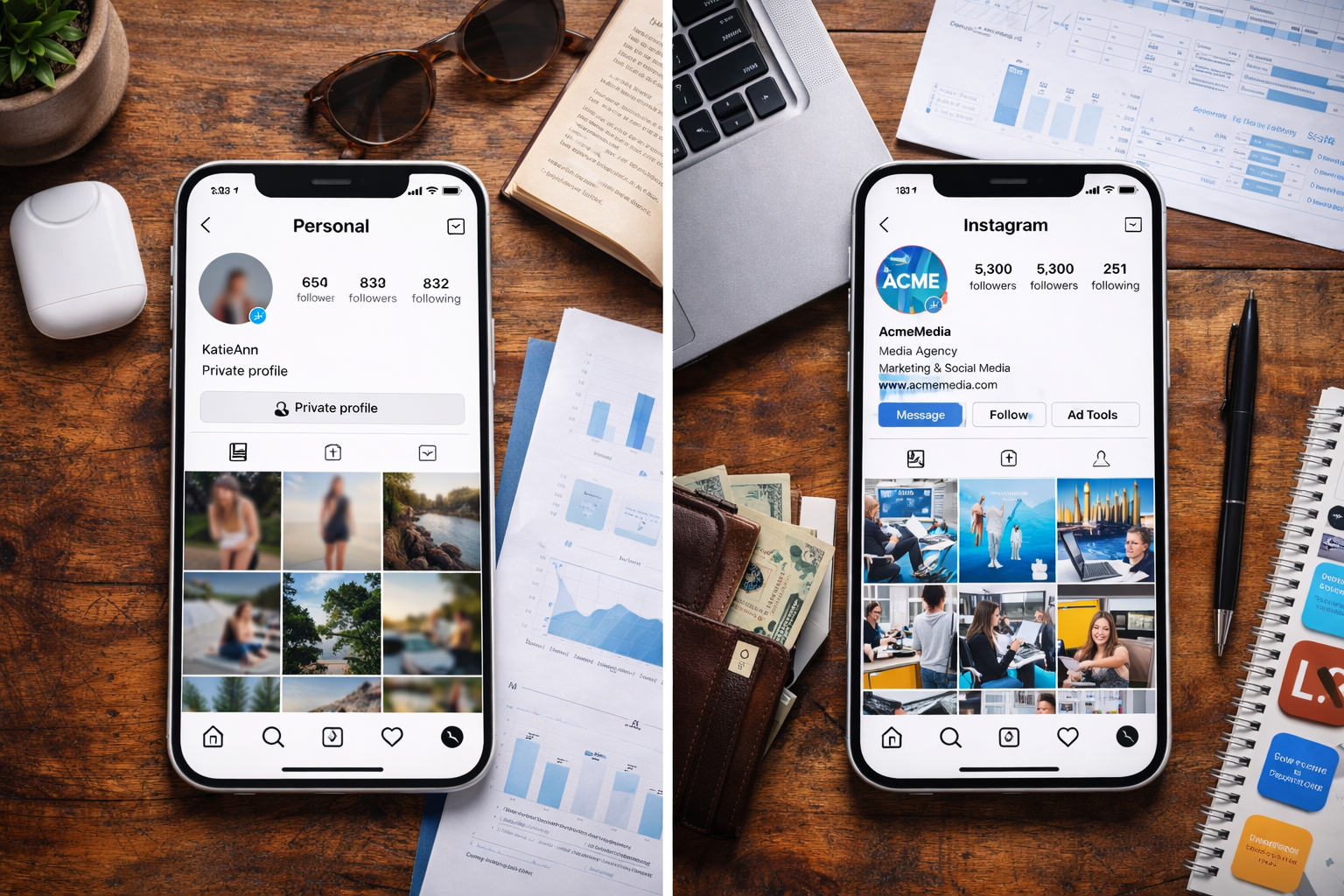
Choosing between a business vs personal Instagram account depends on your goals.
Pro Tip: Many marketers recommend switching to a business account even for small creators, as data-driven decisions improve growth significantly.
A non-commercial, personal account is easy and simple, it works for everyday users who are only looking to spread their content without too much trouble. It also grants you more control over your privacy, with the option to make your account private if you choose. Since there is no tracking of performance metrics, the experience is much more relaxed and oriented around small talk.
The biggest downside of a personal account is the absence of analytics, which means you won’t have access to any insights on your audience or content performance. It also lacks monetization tools, limiting the earning potential. Additionally, since you won’t be able to understand how to expand your business due to the absence of analytics and other additional tools, this type of account might not be a great fit for many.
It gives brands and creators a more professional look, which is helpful. It provides you with access to some valuable insights and an advertising tool, gaining the right knowledge about your audience and improving your content approach. It also allows better targeting for the audience, allowing you to reach the right people more easily.
However, a business account does not allow for a private profile option, so your content is always public. It also needs a more strategic approach to content creation and management. Finally, the interface may be a bit trickier than that of an individual account, particularly for beginners.
The flip from personal to business can affect your reach massively. Using analytics tools, you can figure out what content is the most effective and make it better.
Also, if you're trying to secure a brand identity or handle username issues, services like Instagram username claim can help protect your online presence.
At Hootsuite, some experts claim that accounts that use analytics grow faster simply because they make data-driven decisions rather than guesses.
If you select a business account, following some best practices to optimize results is essential. You have to post consistently (3–5x per week is ideal) to hold your audience’s attention. Instagram Insights is a great tool that lets you keep track of your post performance and see what types of content your audience engages with more.
Another important thing to do here is to optimize your bio with relevant keywords and make sure that you use a clear call-to-action in it for visitors. Moreover, if you are responding via comments and messages more regularly can help create stronger relationships. Besides, in order to save you time, tools such as Meta Business Suite and other scheduling services can be beneficial for streamlining your content.
Business accounts have analytics, ads and contact options while personal are basic & private.
Yes, Instagram lets you change your account type back and forth at any time without losing content.
Yes, because it will provide insight and advertise to a similar audience.
Not necessarily. All types of accounts can achieve the same engagement levels if content is great and targeted.
Yes, switching to a business account is completely free. You only pay if you run ads.
The knowledge about Instagram business account vs personal account leads to smarter decision-making for your goals. As an Instagrammer, a personal account is perfectly fine if you’re using it casually. If you wish to build a presence, however, whether for growth purposes or performance analysis or branding, then a business account is likely the way to go.
Set a goal, select the best account type, and iterate as you grow. Additionally, Professional support services can get you back on track if you experience problems with access to your accounts or branding.
.avif)



.avif)


.png)
.png)
.png)
.png)